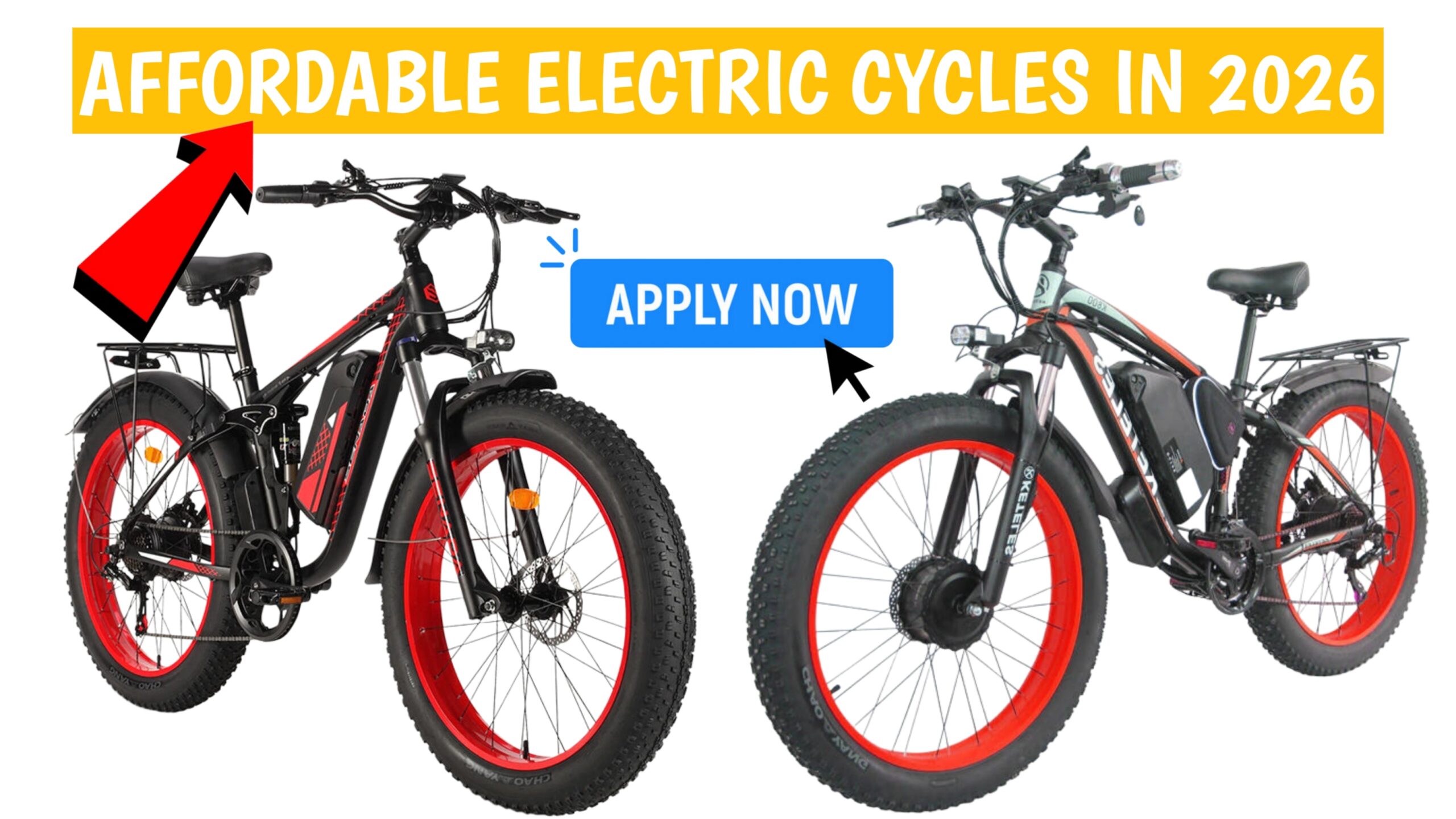
What to Look for in an Affordable E-Cycle
Before listing models, let’s highlight the main features buyers should consider:
Battery Capacity & Real-World Range
Look for cycles with battery options that meet your daily distance. In India, many budget cycles claim 30–60 km range. Hero Lectro C3, for example, advertises up to 30 km per charge — realistic for short urban commutes.
Motor Power
Most affordable electric cycles use a 250 W BLDC motor — sufficient for city roads and small inclines.
Brakes & Safety
Disc brakes, even on budget models, add stopping confidence in traffic.
Service Network
Choose brands with local presence or service partners so you can get support if needed.
Pedal Assist vs Throttle
Pedal assist eases pedaling, while throttle-only allows motor-driven movement without pedaling. For daily use, pedal assist helps extend battery life.
Top Affordable Electric Cycles to Consider in 2026
The following electric cycles are among the most affordable and realistic options for daily use — especially for students, commuters, and casual riders.
1. Hero Lectro C3
Price: ~₹28,999 (approx)
Range: Up to 30 km per charge
Motor: 250 W BLDC hub motor
Charging time: ~4 hours
Brakes: Disc + V-brake
Features: Multiple riding modes (pedal, cruise, throttle)
Why it works:
This model is frequently cited in lists of entry-level electric cycles under ₹30,000, offering a balance of basic electric assistance and reliable components. Its compact design suits city rides and daily errands.
Case Note:
A student living in a tier-2 city reported that the Lectro C3 met their short daily commute needs (8–12 km one way) and required only weekly charging over the semester.
2. EMotorad X2
Price: ~₹27,999 (approx)
Range: 40+ km per charge
Battery: 7.65 Ah
Frame: High tensile steel
Display: LCD status panel
Why it works:
EMotorad’s X2 model extends range beyond many basic e-cycles and includes a simple display. With a single-speed frame and pedal assist, it works well for flat city areas.
Case Note:
A young professional used the X2 for daily travel to work on relatively flat roads; consistent battery performance allowed them to avoid rides on public transport.
3. Voltebyk Hybrid Electric Cycle
Price: ~₹23,990 (discounted; original ~₹29,990)
Range Options:
- ~40 km with 7.8 Ah battery
- ~50 km with 10.4 Ah
- ~70 km with 13 Ah
Speed: Up to ~25 km/h
Brakes: Dual disk
Motor: High torque 250 W BLDC
Why it works:
Voltebyk’s Hybrid cycle offers multiple battery sizes, allowing buyers to choose based on commute distance. The larger 13 Ah battery approaching ~70 km range is particularly useful for longer daily routes.
Case Note:
A commuter pairing with a detachable battery found it convenient to charge indoors and avoid power interruptions during study/work hours.
4. Hornback M1
Price: ~₹18,999 (entry-level)
Range: Moderate (around 25–35 km typical)
Features: Basic electric assistance and straightforward ride behavior
Why it works:
For buyers with very tight budgets, the Hornback M1 represents some of the lowest price points in 2026 while retaining basic electric support.
Case Note:
A college student used this cycle purely for short commutes around campus and local errands, appreciating that maintenance stays minimal and easy.
5. EMotorad Doodle & Other Mid-Budget Picks
Price: ~₹49,999 (approx)
Range: ~35–60 km
Top Speed: ~25 km/h
Why it works:
Although slightly above basic budget range, this category brings better range and comfort features like enhanced frame stability. Models around ₹40K–₹50K can feel more substantial in build and ride quality.
Case Note:
A daily commuter choosing this segment found the extended range helpful for both work commutes and occasional longer trips on weekends.
Comparison Table (2026 Affordable Electric Cycles)
| Model | Estimated Price (₹) | Range (Approx) | Best For |
|---|---|---|---|
| Hero Lectro C3 | ~28,999 | ~30 km | Short city commute |
| EMotorad X2 | ~27,999 | 40+ km | Commuters & errands |
| Voltebyk Hybrid | ~23,990 | ~40–70 km | Adjustable range needs |
| Hornback M1 | ~18,999 | ~25–35 km | Campus & short rides |
| EMotorad Doodle | ~49,999 | ~35–60 km | Mid-budget comfort |
(Figures based on available 2026 listings and price bands; actual prices may vary by city and offers.)
How to Pick the Right Affordable E-Cycle for You
1. Estimate Your Daily Distance
If your daily travel is under 15–20 km, a smaller battery option like Hero Lectro C3 or Hornback M1 can suffice. If you ride longer distances daily, choose models with larger batteries.
2. Check Service Support
Affordable cycles are great, but spare parts and after-sales service matter. Brands like Hero and EMotorad have wider recognition, which can make finding parts easier.
3. Understand Real-World Range
Manufacturers’ claimed range often assumes flat roads and light loads. Real conditions — inclines, rider weight, stop-and-go traffic — can reduce range, so choose a battery with some extra capacity.
4. Battery Convenience
Detachable batteries let you charge at home instead of carrying the whole cycle to a charger — a practical option if you live in apartments without ground-floor charging points.
Real Usage Case Studies (2026 Reality)
Case: Student Commuter in Pune
A student choosing an electric cycle for 12 km daily school travel picked an EMotorad X2 for its balance of range and price. Real usage over three months showed about 35–40 km range under mixed city conditions, meaning daily rides demanded charging only every two days.
Case: New Rider in Delhi NCR
A beginner rider opted for Voltebyk’s 10.4 Ah battery option due to the detachable battery and moderate range. Having a removable battery allowed charging indoors and avoided dependence on outdoor sockets.
Case: Basic Utility in Patna
A commuter on a tighter budget chose Hornback M1 for trips around local markets and office travel. While it had a shorter range, it met daily needs without financial strain or complicated maintenance.
Tips Before You Buy an Electric Cycle in 2026
- Test Ride When Possible: Ride feel, pedal assist behavior, and brake responsiveness vary between models.
- Ask for Warranty Details: Battery and motor warranty periods differ; a longer warranty can reduce long-term cost.
- Look for Local Dealer Support: Especially if you plan daily use, having nearby support saves time and money.
- Check Battery Safety Standards: Proper certifications and quality batteries reduce risk and improve longevity.
Conclusion — The Smart Choice for 2026 Riders
Affordable electric cycles in 2026 are not just cheap alternatives — they are practical solutions for daily mobility. Whether you’re a student, a commuter, or someone who wants to reduce transport cost and carbon footprint, options exist across price ranges from under ₹20,000 to roughly ₹50,000 and above.
- Start by estimating your daily distance and charging flexibility.
- Choose a model with realistic range and service backing.
- Balance initial cost with long-term reliability and battery support.
With electric cycles gaining traction, users are finding that even budget models can reliably replace short trips that would otherwise require petrol or public transport.
Are Electric Cycles Under ₹30,000–₹45,000 Reliable For Daily Use?
Electric cycles in the ₹30,000–₹45,000 range have become popular in 2026 for students, office commuters, and delivery workers. Here are the key points that explain their reliability for daily use:
- Affordable Pricing: Models from brands like Hero Lectro, Ninety One, and Ampere fall within this range, making them accessible for budget-conscious buyers.
- Battery Range: Most affordable e-cycles offer 40–60 km per charge, which is sufficient for short city commutes and college runs.
- Charging Time: Standard charging takes 3–4 hours, and batteries can be charged at home using a normal socket.
- Speed & Legal Compliance: With a top speed of 25 km/h, these cycles do not require registration or a driving license, making them hassle-free.
- Durability: Frames are lightweight yet sturdy, designed to handle daily urban roads.
- Maintenance Costs: Annual servicing is minimal compared to petrol scooters, and battery replacement costs ₹7,000–₹12,000 after 3–4 years.
- Eco-Friendly Travel: Zero emissions and pedal-assist modes make them sustainable and healthier for riders.
- Case Study Insight: A student in Delhi saved over ₹1,500 monthly by switching from metro travel to an affordable e-cycle.
Conclusion: Electric cycles under ₹45,000 are reliable for everyday commuting, offering cost savings, convenience, and sustainability for urban users.