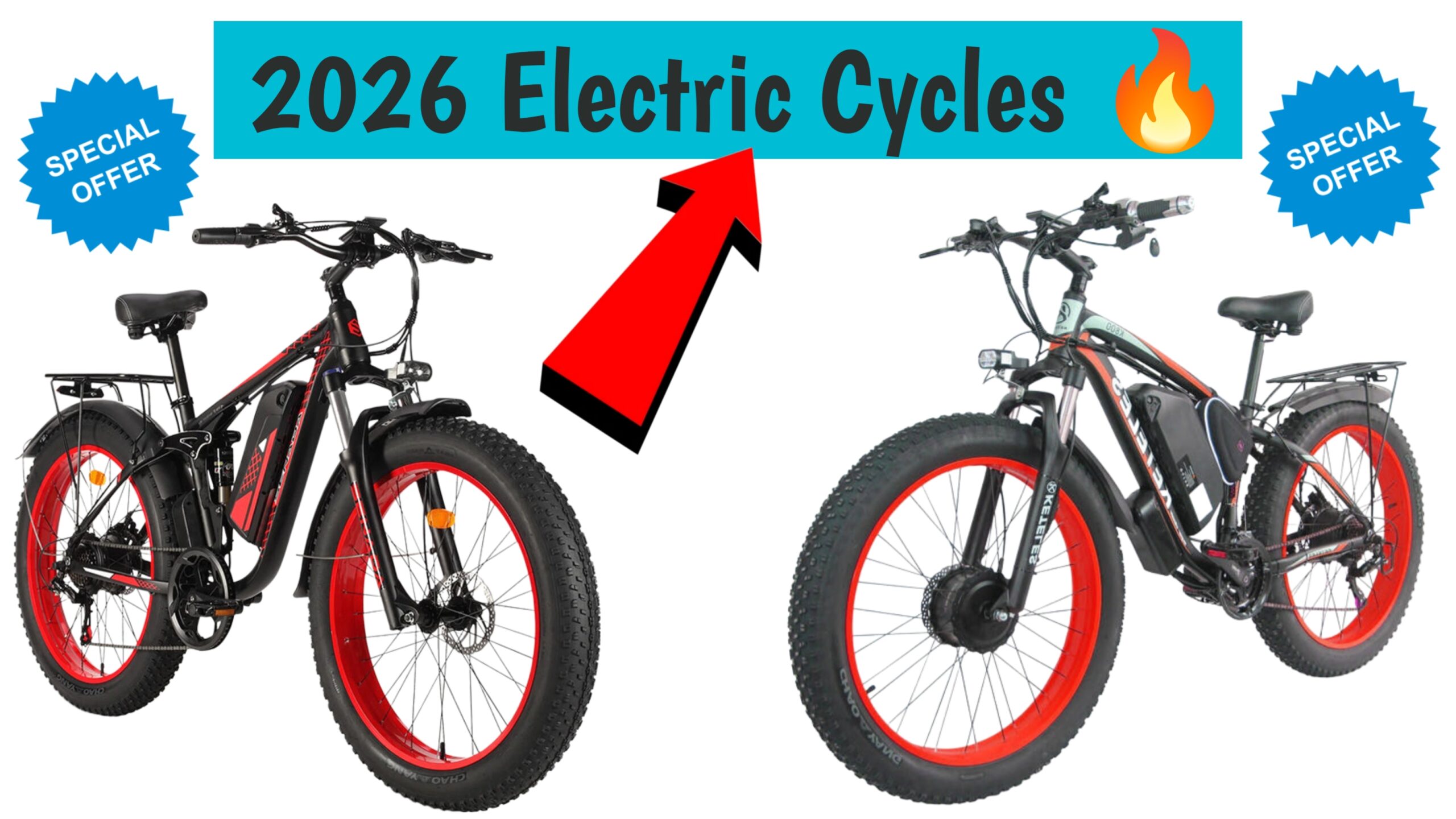
Electric cycles in 2026 are becoming a practical option for daily commuting, fitness, and short-distance travel as brands focus on affordability and efficient battery performance. The average price ranges between ₹25,000 and ₹55,000, depending on battery capacity and frame design.
Most models now offer 40–80 km of real-world range on a single charge, making them suitable for city use. Features like lightweight frames, improved braking systems, fast-charging batteries, and smartphone-based ride monitoring are becoming standard. Several companies are preparing new launches in 2026, aiming to offer better durability, longer battery life, and cost-effective travel.
1) Market Snapshot For 2026 — What’s Available And What To Expect
In India and similar markets, the e-cycle category now includes: low-price assisted cycles (₹25k–₹40k), mid-range commuter e-cycles (₹40k–₹80k), and performance/hybrid e-cycles that cost more. Brands such as Hero Lectro have multiple models across price bands — for example the Lectro lineup shows models priced from around ₹25,999 to ₹61,999 with claimed ranges between ~40–60 km depending on model. These numbers give a realistic price band to plan around. Hero Lectro+1
Key trends you should know for 2026:
- Multiple price tiers: entry-level e-cycles for short commutes are widely available; mid-range models add better batteries, digital displays, and disc brakes. Hero Lectro
- Battery & motor options: Most city e-cycles use 250 W hub motors and 36 V batteries sized to deliver 30–60 km per charge in mixed use. BikeDekho
- Distribution & service: Larger manufacturers (Hero, Hero Lectro, established cycle companies) offer better dealer/service networks; this matters for long-term ownership. herocycles.com
2) Short, Realistic Case Study — Hero Lectro Muv-E & Lectro H3/H4 series
To make the facts concrete, let’s look at real models that many buyers consider in 2025–26.
Example: Hero Lectro Muv-E (example mid-range model)
- Price: ~₹61,999 (ex-showroom / listed retail).
- Claimed range: Varies by model; many Lectro city e-bikes claim 40–60 km depending on battery pack and usage.
- Motor: Typical 250 W motor; battery and motor spec tuned for city commuting.
- Features: Disc brakes on higher trims, LCD/colored displays on newer variants, internal or detachable batteries. CMB+1
What this tells us (real-world reading): a buyer with a 10–25 km daily commute can expect a Lectro model to meet needs if they choose the right battery option and factor in the real-world conditions (weight, stops, inclines). Service coverage from a well-known brand reduces the risk of long downtime. BikeDekho+1
3) Price & Range Guide (Practical Numbers To Plan By)
Use these practical bands when you set a budget:
- Entry commuter (₹20k–₹35k) — Basic e-assist cycles with small batteries, 30–40 km claimed range. Good for <10 km daily rides in flat areas. (Example: basic Lectro models). BikeDekho
- Single-day commuter (₹35k–₹60k) — Better batteries, detachable packs, 40–60 km claimed range, better brakes and displays. This is the “sweet spot” for many city users. (Example: higher Lectro trims). Hero Lectro
- Performance / long-range hybrids (₹60k+) — Bigger batteries or improved motor systems, extended real-world range, sturdier frames. Choose this if you need longer single-day range or heavier loads. ZigWheels.com
Important: Claimed range is usually measured under ideal conditions. Expect 20–40% lower range in mixed urban conditions (traffic stops, hills, AC baggage, heavier rider). So if you need 40 km in daily real use, target a claimed range of ~55–65 km.
4) Short Comparison Table (Real Example Numbers To Compare)
| Model (example) | Price band (₹) | Claimed Range | Motor | Notable points |
|---|---|---|---|---|
| Lectro H3 / H4 (city trims) | 25,999–33,499 | ~30–45 km | 250 W hub | Entry city use; light battery. ZigWheels.com |
| Lectro WINN / V24 | 44,999–49,999 | ~45–60 km | 250 W hub | Detachable battery options; better brakes. BikeDekho |
| Lectro Muv-E | ~61,999 | ~50–60 km | 250 W hub | Heavier frame, built for load/comfort. CMB |
5) Quick FAQs (What Readers Ask Most Often)
Q: Are e-cycles legal to ride without a license?
A: Many low-power pedal-assist e-cycles (250 W and limited speed) are treated like bicycles in several regions. Local rules vary — check city/state regulations.
Q: How long do e-cycle batteries last?
A: Typical lithium-ion e-cycle batteries last 3–6 years depending on cycles, charging habits, and climate. Warranty terms vary by brand. Hero Lectro
Q: How much does it cost to replace a battery?
A: Replacement battery cost depends on capacity and cells; plan for a significant mid-life expense (often 30–60% of the original bike cost for some models). Check exact pricing with the manufacturer.
Conclusion — Practical Choice, Not Perfect Choice
In 2026, electric cycles are a practical mobility solution for many riders. The product range covers low-cost commuters to higher-capacity models that handle longer daily distances. The key is to plan around real-world range, service support, and battery life, not marketing claims. If you follow the checklist and validate a few factual specs (battery capacity, motor power, dealer coverage), you can pick an e-cycle that saves money and time without surprises.
How Do 2026 Electric Cycle Models Compare to 2025 Launches in Terms of Affordability?
Introduction
Electric cycles, also known as e-bikes, have become a practical commuting option for urban riders. With rising fuel costs and growing interest in sustainable transport, the market for e-bikes in India and globally has expanded rapidly. The key question for 2026 is: Are the new electric cycles more affordable compared to 2025 models?
Price Trends: 2025 vs 2026
In 2025, most branded electric cycles were priced between ₹35,000 and ₹1.20 lakh, depending on battery capacity, frame design, and added features. Entry-level commuter e-bikes from Hero and Ninety One targeted budget-conscious riders, while premium brands like Trek and Giant offered advanced models with higher price tags.
By 2026, the price range has become more competitive. New launches are expected to start from ₹30,000, with mid-range commuter e-bikes averaging ₹60,000–₹80,000. Premium cycles with long-range batteries and smart connectivity still cross the ₹1 lakh mark, but manufacturers are clearly working to keep entry-level options affordable.
Factors Driving Affordability in 2026
- Battery Innovation: Advances in lithium-ion and LFP batteries have reduced costs while improving durability.
- Local Manufacturing: More companies are assembling frames and batteries in India, lowering import expenses.
- Government Support: Incentives under FAME-II and state-level subsidies continue to reduce upfront costs.
- Market Competition: With new entrants in 2026, pricing strategies are sharper, benefiting consumers.
Case Study Comparison
- Hero Lectro (2025): Priced around ₹40,000 with a 40–50 km range.
- Hero Lectro (2026 update): Expected at ₹38,000 with a 60 km range, offering better value at a slightly lower price.
- Ninety One Meraki (2025): Around ₹65,000 with mid-level features.
- Ninety One Meraki (2026): Expected to stay near ₹60,000 but with improved battery life and smart display integration.
This shows that 2026 models deliver longer ranges and smarter features without significant price hikes, making them more cost-effective.
Conclusion
When comparing 2026 electric cycles to 2025 launches, affordability has improved in practical terms. Entry-level models are cheaper, mid-range options offer better range, and premium cycles justify their price with advanced features. For riders, 2026 is shaping up as the year when electric cycles become not just eco-friendly but also financially sensible for everyday commuting.