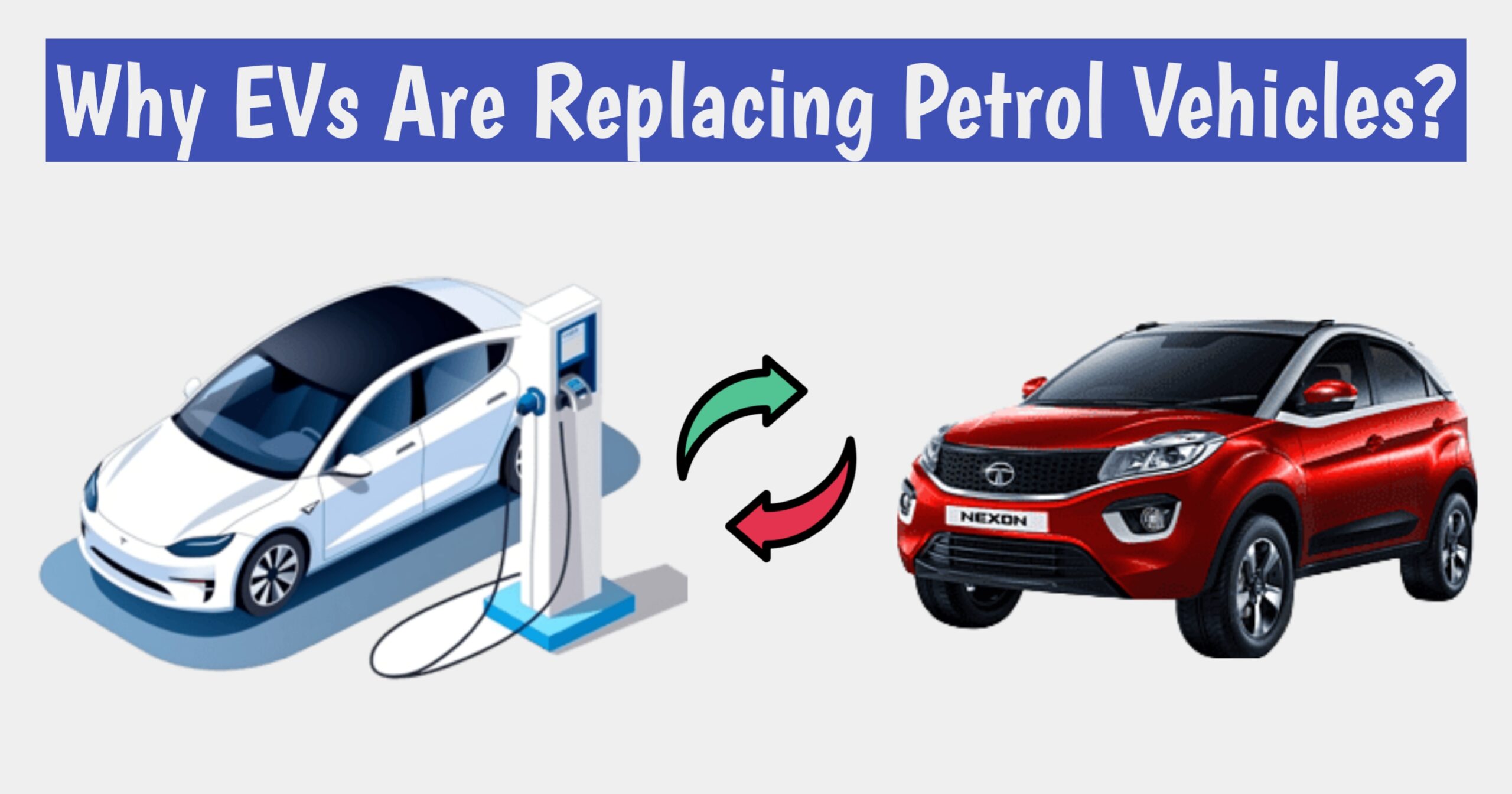
Understanding the Core Difference: EVs vs Petrol Vehicles
Petrol vehicles rely on internal combustion engines with multiple moving parts. EVs run on electric motors powered by batteries.
Key differences:
- EVs have fewer mechanical parts
- No fuel combustion in EVs
- Electricity costs less per kilometer
- Maintenance requirements are lower
This difference alone changes ownership economics.
Reason 1: Rising Petrol Costs vs Predictable EV Running Costs
The Cost Problem
Petrol prices have increased steadily over the past decade. For daily commuters, fuel expenses form the largest ownership cost.
In contrast:
- EV charging costs are lower per kilometer
- Home charging reduces dependency on public prices
- Electricity prices are more stable than petrol
Case Study
A delivery executive in Pune switched from a petrol scooter to an electric scooter in 2024. By 2026, the monthly running cost dropped significantly, allowing savings that covered EMI payments.
Reality
EVs reduce daily operational stress related to fuel expenses.
Reason 2: Lower Maintenance and Fewer Breakdowns
Petrol Vehicle Maintenance Issues
Petrol vehicles require:
- Engine oil changes
- Clutch replacements
- Exhaust system repairs
- Regular servicing
EVs:
- Do not need oil changes
- Have fewer moving parts
- Experience less wear and tear
Case Study
A taxi operator in Bengaluru replaced part of their petrol fleet with EVs. Maintenance downtime reduced, and vehicle availability increased, improving earnings.
Key Insight
Lower maintenance directly impacts total ownership cost.
Reason 3: Government Policies and Regulations
The Policy Shift
Governments worldwide are pushing for cleaner transport:
- Subsidies on EV purchases
- Reduced registration fees
- Lower road taxes
- Stricter emission norms for petrol vehicles
Many cities are planning:
- Low-emission zones
- Future bans on older petrol vehicles
Case Study
A family in Delhi opted for an EV due to concerns over future petrol vehicle restrictions and higher taxes on older engines.
Reality
Policy direction favors EV adoption, not petrol.
Reason 4: Environmental Impact and Urban Pollution
Petrol Vehicles and Emissions
Petrol vehicles emit:
- Carbon dioxide
- Nitrogen oxides
- Particulate matter
These contribute directly to:
- Air pollution
- Health problems
- Climate impact
EVs:
- Produce zero tailpipe emissions
- Reduce noise pollution
Case Study
A residential society in Mumbai noticed reduced noise levels after multiple residents shifted to electric scooters.
Important Note
While electricity generation still has emissions, EVs reduce pollution at the usage point, especially in cities.
Reason 5: Improved EV Range and Charging Infrastructure
Earlier Concern
Range anxiety was a major barrier.
2026 Reality
- EV range has improved significantly
- Fast-charging stations are expanding
- Home and workplace charging is common
Case Study
A sales professional in Ahmedabad drives over 80 km daily using an EV sedan and charges overnight at home, eliminating fuel station visits.
Insight
For most urban users, EV range is already sufficient.
Reason 6: Better Driving Experience
User Experience Comparison
EVs offer:
- Instant torque
- Smooth acceleration
- Silent operation
Petrol vehicles:
- Gear shifts
- Engine noise
- Vibration
Case Study
A first-time car buyer in Kochi chose an EV for its smooth driving experience, especially in traffic-heavy conditions.
Conclusion
Once users experience EV driving, many do not want to return to petrol vehicles.
Reason 7: Long-Term Cost of Ownership
Ownership Cost Breakdown
Petrol vehicle cost includes:
- Fuel
- Maintenance
- Emission compliance costs
EV ownership includes:
- Electricity
- Battery care
Battery prices have decreased, and warranties have improved.
Case Study
A family in Jaipur calculated five-year ownership costs and found EV ownership cheaper despite higher initial cost.
Key Takeaway
EVs offer better long-term value.
Reason 8: Corporate and Fleet Adoption
Why Businesses Choose EVs
- Lower operational cost
- Predictable expenses
- Sustainability goals
Case Study
An e-commerce company replaced petrol delivery vehicles with EVs to cut costs and meet environmental targets.
Impact
Corporate adoption accelerates EV infrastructure and acceptance.
Reason 9: Resale Value and Future Readiness
Changing Market Perception
Earlier concerns about EV resale value are reducing as demand increases.
Petrol vehicles face:
- Uncertain future regulations
- Depreciation risks
Case Study
A used-car dealer in Chandigarh reported increasing demand for pre-owned EVs.1. Lower Running Costs
- EVs cost ₹1–2 per km, compared to ₹6–8 per km for petrol vehicles.
- Charging is cheaper than refueling, especially with home or solar charging setups.
- Automakers like Tata, Mahindra, and Hyundai have expanded EV offerings.
- Economic Survey 2026 highlights EV adoption as a growth driver for India’s auto industry.
📊 Comparison Table: EVs vs Petrol Vehicles
| Factor | EVs (2026) | Petrol Vehicles (2026) |
|---|---|---|
| Running Cost | ₹1–2 per km | ₹6–8 per km |
| Maintenance | 30–40% lower | Higher, frequent servicing |
| Fuel/Charging Cost | Stable electricity rates | Rising petrol prices ₹110+/L |
| Environmental Impact | Zero tailpipe emissions | High CO₂ and air pollution |
| Government Support | Subsidies, tax waivers | No incentives |
| Infrastructure | 12,000+ charging stations | Established fuel stations |
🔍 Key Insights
- Economics drive adoption: Families and businesses save thousands monthly by switching to EVs.
- Policy support matters: Government incentives accelerate the transition.
- Technology improvements: Better batteries and faster charging make EVs practical.
- Case studies prove success: From cab drivers to logistics firms, EVs deliver real-world benefits.
Challenges That Still Exist
EVs are not perfect.
Current limitations:
- Charging infrastructure in rural areas
- Higher upfront cost for some models
- Battery recycling concerns
However, these issues are being addressed steadily.
Petrol Vehicles: Are They Becoming Obsolete?
Short-Term
Petrol vehicles will still exist, especially in rural and long-distance use cases.
Long-Term
Urban mobility is clearly shifting towards EVs.
Consumer Mindset Shift
Earlier Mindset
EVs were seen as risky or experimental.
2026 Mindset
EVs are practical, economical, and future-ready.
Case Study
A middle-class household in Nagpur switched to an EV after observing neighbors’ positive ownership experience.
Do Government Subsidies Really Make EVs Affordable?
One of the biggest questions in 2026 is whether government subsidies truly make electric vehicles (EVs) affordable compared to petrol cars. The answer lies in how these subsidies reduce upfront costs and long-term expenses.
📌 Key Points
- Purchase Incentives: In India, schemes like FAME II provide subsidies of up to ₹1.5 lakh on electric cars and ₹20,000–₹50,000 on two-wheelers. This directly lowers the initial purchase price, making EVs competitive with petrol vehicles.
- Tax Benefits: Many states waive road tax and registration fees for EVs. For example, Delhi’s EV policy saves buyers nearly ₹30,000 on registration costs.
- Running Costs: Even without subsidies, EVs cost ₹1–2 per km, compared to ₹6–8 per km for petrol. Subsidies make the switch easier by reducing the upfront burden.
- Case Study: A family in Bengaluru purchased a Tata Nexon EV in 2025. With subsidies and tax waivers, the car cost ₹1.2 lakh less than the listed price. Over a year, they saved nearly ₹60,000 in fuel expenses compared to their old petrol car.
✅ Conclusion
Yes, government subsidies significantly improve EV affordability. Combined with lower running costs and reduced maintenance, subsidies make EVs a practical choice for students, families, and businesses in 2026.